Showing posts with label Tourism. Show all posts

Monday, June 17, 2013

Russia took the 20th place in Country Branding Ranking 2012

Bloom Consulting Company released a new annual Country Branding Ranking. According to this ranking the USA continues its reign as the world leader in the 2012 Country Brand Ranking both for Trade and for Tourism, the strong overall performance and excellent CBS Rating ensured its’ continued dominance. For the first time, the United Arab Emirates, joined some of the Asian Tiger economies in the top 25 both in the Tourism and Trade Rankings.

Asia performed extremely well in the 2012 Ranking. Eight Asian countries finished in the top 25, with China as number four. Aided by both strong tourism receipts and CBS Ratings, Thailand (6) and Malaysia (14) significantly improved from last year. For the first time, Macao was evaluated as an individual country and finished with a bang at number eight. A notable absence was Japan.

Russia takes the 20th place in this ranking between Croatia and Portugal. The progress is called here “Slightly Strong”.

CBS Rating is calculated using brand strategy economic performance analysis and analysis of Online Search Demand. The country brand strategy is measured through brand tags, the key words that reflect the brand strategy of each country. For the first time in any country or nation brand ranking, Bloom’s Online Search Demand (OSD) is able to show if a country supplies what tourists are seeking, and how well the country is matching this demand.

Brand tags function as the ‘supply’ side of the tourist-destination equation. Thousands of brand tags were collected from each country’s official tourism agency and then classified into 38 different clusters that relate to adventure sports and activities, natural features, local culture and traditions, or gastronomy. Each cluster is assigned an economic value in order to rate the relative returns gained from each brand tag.

Domestic and international tourist searches for the brand tags and related words were then analyzed, country by country, in the most used search engines, to show the country’s accuracy match and quantify Online Search Demand. By considering the OSD, Bloom Consulting is able to show if a country offers what tourists are seeking, and how well the country is matching this demand. This identifies the gap between supply and demand. The more accurate a country is, the better the CBS Rating.
The Ranking for Tourism you can see here - http://www.bloom-consulting.com/sites/default/files/files/Bloom_Consulting_Country_Brand_Ranking_Tourism_2012.pdf 

Tuesday, September 11, 2012

Poo Internet. New barter in Mexico City


In the end of April a lot of colored containers like dustbins appeared in Mexico City parks. On there bottoms there are special balances. As soon as something falls to them, a Wi-Fi router actuates, and the Internet begins to work on the whole area of the park. That thing is… doo-doo. More dog excrements mean more time of wireless Internet. It is not necessary to have a password to access to Wi-Fi therefore you can check your mail and read Twitter absolutely free.
 
 “Poo Wi-Fi”. This action was thought up by advertising agency DDB by the order of Internet service provider Terra which finances installation and set-up of containers and routers. The idea is to kill two birds with one stone: to provide public places by free wireless Internet and to do these places cleaner. With population of 20 million people the Mexican parks became an excellent experimental territory because of huge popularity of dogs as pets and low consciousness of citizens themselves.

 “It is more interesting for people to look at their telephone but not to watch their dogs walk. And so Wi-Fi in the parks is good motivation to stoop down, gather excrements and put them into containers” – they say in DDB.

A cheerful promo video was disseminated when DDB started up the campaign. http://www.youtube.com/watch?v=qwpRnA_-jaY&feature=player_embedded


There dogs poos are compared tactfully with chocolate ice-cream. In the sense to impress infantile psyche. On parks’ territories the white bones are hanged and they attract attention of people. These bones are Wi-Fi routers. In the day time the managers stay there and tell about idea and show where to take a special packet. But above all – the access time depends directly on size and weight of “deposits”. It makes someone to feed dogs with hearty meal, others to gather waste of another’s pets. It doesn’t harm a cause.

It is credited one minute of Internet for five grams. So, Mexico dogs produce 600 tones of excrements yearly. And if to gather all them it is possible to get free Internet for 228 years.

In spite of that idea aroused hailstorm of jokes and wonders, people began to use the service very actively and the parks became cleaner. In the future DDB and Terra want to use filled containers like bioreactors and generate electricity for the parks. But it is only one weak point of “Poo Wi-Fi” project. The containers now don’t tell excrements from ordinary litter and stones. You can pelt with everything and the Internet will work in any case. It is imperfection at least but not terrible. To walk along paths and grassplots became more pleasant.

So if you’ll be in Mexico in transit take a scoop with you and save on some pesos.

by Valentin Ivanov

Friday, August 31, 2012

Bloom Consulting Country Brand Ranking


Bloom Consulting, has created this World Ranking in order to answer the fundamental
issue at the heart of every country, corporation and soul: how does one become attractive?
Luckily, the rationale behind such a question for a nation is quite simple.
A country wishes to draw the interest of people in order to create wealth.
In other words, the purpose of country branding is to bring economic growth.
We asked the creators of the ranking to answer several questions for everyone to understand the importance of this issue.

Why you decided to make this rating?

Bloom Consulting conducted this study in order to answer the fundamental question at the heart of every country, corporation and soul: How does one become attractive?  The goal of our ranking is to provide a complete, comprehensive and objective view of each country’s brand.  We want to promote the importance of country branding. Country branding should be used as a strategic development tool, literally, to create an impact on GDP. It is a tool to establish the vision of the country to increase economic development.

During your research, were you contacting and interacting with the countries’
representatives? if yes, which was their reaction?

During the research phase we used information gathered through the Tourism Board Organizations (TBOs) of the respective countries associated with the World Tourism Organization. Information regarding strategies used by countries to attract FDI was taken from the Investment Promotion Agencies (IPAs) of the respective countries associated with the World Association of Investment Promotion Agencies (WAIPA). 

When these TBOs were not accessible through the Word Tourism Organization or IPAs were not accessible through the WAIPA, information was gathered from embassies or chambers of commerce.

As we only contacted the countries TBOs or IPAs regarding validation of the data they did not have reactions per se regarding our research. Some were collaborative and provided us with deep information while other resisted

Did you use some exact rankings as an example?

No we did not use other rankings as an example. Our ranking is entirely independent from others and as such takes into account many factors and variables others do not.  For example, our ranking takes hard facts and official data supplied by the countries into account as opposed to surveys and interviews. Also henceforth we have considered the power of Google and tourists and investor demand analysis when conducting the 2012 research, an aspect which no other ranking has taken into consideration before.

Can anyone judge your research as fair and impersonal?

Yes. One can judge our research as fair and impersonal since it is not based on opinion and perceptions. It is a combination of Official Financial information mixed with what the world is offering and what the world is looking for.

Are you going to apply your ranking list for some studies, publications, etc?

Presently our ranking list is available on our website for interested parties to read. Our vision is that this information should be available for anyone to read and understand a country brand is a valuable tangible asset that generates wealth and economic development.

How long did it take to write your research?

In order to accurately conduct the research we took more than half a year when compiling the Bloom Consulting Country Brand Rankings.

For some countries with the “negative impacts”, do you have any suggestion?

Canada for example, has not been able to match the success of its neighbour in the global ranking, as they have ranked 23rd in the Bloom Consulting Country Branding Ranking© for tourism.

This rank is fairly low when compared to other countries with similar characteristics. Canada’s negative rating factor indicates that its country brand strategy lowers Canada’s position in the global ranking. Even though country brand strategies of both countries share similar characteristics, the US incorporates the 5 most valuable positions for the region, while Canada does not. In order to increase the effectiveness of their strategy Canada needs to include more valuable positions within their brand strategy.

In other words, Canada needs to differentiate itself better.

You can follow the Bloom Consulting Country Brand Ranking Web site here http://www.bloom-consulting.com/.


Tuesday, August 21, 2012

The Cheonggyecheon brook. Money stream from Seoul.


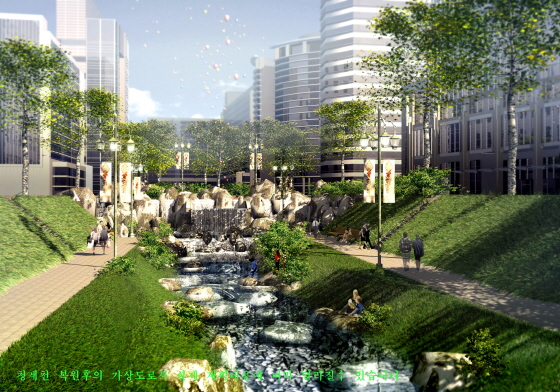
 There is a brook along the whole Seoul centre, the citizens and tourist like walking here. Fountains play here and banks are faced by decorative tiles and good facing stones. Water makes fresh microclimate at the riverbed which is particularly pleasant in sultry summer. This place is described in all new Seoul’s guidebooks. This stream is called Cheonggyecheon and it has its own, very interesting story. On the one hand it’s too unusual, but on the other hand it characterizes modern South Korea.
 
It would seem what history can this paltry brook have? In fact this rivulet was here all the time. It played an important part in Seoul life: as far back as in the first half of XV century there were great deepening works according to Korean king’s order. After Korean war, in the 50s the district around the river was very demolished, a lot of shacks appeared along the banks because of emigrant influx from North Korea, and sewage flew into the Cheonggyecheon. It changed into stinking cesspool. In 60s the local authorities decided to struggle with those insanitary conditions. They pulled down the slums, resettled people, put the brook into underground pipe and built a motorway above this place. The plan was fulfilled promptly and with high quality as usual. The expressway appeared here in 1970 and it was the double-level one.

More than thirty years later the situation in Korea changed. The state had more money, and the citizens needed more recreation zones and ecologic places for walking. And it was necessary to attract tourists by something amusing. And right then they remembered about the old “buried” Cheonggyecheon brook. The main initiator of such a project was today’s Korean president Lee Myung-bak. By the by his “green” project is not unique: for example we can remember “the Seoul Forest”. A plan of the Cheonggyecheon restitution in the Korean capital looked absolutely fantastic! According to the plan it was necessary to take down the thoroughfare completely, break up, manage and decorate the river bed, fill it with pure water. And all these in two years and with $ 300 million.

So, the plan was fulfilled, and the modern relaxation zone opened for visitors since 2005, thousands of tourists and citizens walk here every day. All guidebooks without information about the Cheonggyecheon stream became out of date in one day. This project changed Seoul plan and face and corrected its sightseeing list very much. Per se the new Cheonggyecheon represents a gaunt landscape park at the very city centre. You can sit on the stones, wet your legs in limpid waters and admire numerous bright fountains.

In the river head there are some fountains: like a candle, like a fireworks and not big double-level fountain. Downstream there is a fountain-tunnel, water here flows out from 42 holes from the height of 5 meters and makes a great high arc above the promenade avenue. One more famous fountain is a rhythmic one, water here pours down on the marble wall and with special highlight and music it makes an impression that the fountain moves rhythmically.

 The Cheonggyecheon is too long, it is about 10 km. There are 22 bridges above the stream but it is possible to cross it by stones installed in special way.

Besides fountains there are some “walls” there. The Hope Wall adorns both sides of the Cheonggyecheon quay, it expresses pain and suffering about the division of Korea into two countries and the hope of their consolidation. The wall is faces by ceramic tiles where 20 thousand Koreans from all over the world (and from North Korea also) wrote about necessity of the country to became integral again. The Culture Wall is painted by five modern artists. Paintings on the Pangcheangdo, the hugest ceramic wall in the world, are devoted to the 22nd King of the Cheosong dynasty journey to his parents’ grave.

Even the slums along the Cheonggyecheon brook were reconstructed. There are five two-storied houses which are very similar to those ones where the poor men huddled together 40 years ago. And which is more the interior of that epoch is rendered everywhere.

Countless markets and small restaurants cover the Cheonggyecheon brook neighborhoods. Right here in the Kwangyang market the biggest Seoul street of lunchrooms called Mokchakolmok is situated. “The fried fish alley” turns into “The whole boiled chicken alley”. All it works even at night.

Water in the Cheonggyecheon stream is pure enough, it is possible to see fishes there and parents allow their children to swim in the river. But the constructors could not let natural mountain water to the brook, there is tap water there. Probably it is the only one disadvantage of the project. May be it will be eliminated in the near future.

by Valentin Ivanov

For more information please visit ID-reel.com
Or Join us on Facebook  and Linkedin!

Wednesday, August 8, 2012

Same, same, but different

How the former Yugoslavia countries try to find the individual way to market themselves

Having a look on the former Yugoslavian countries, we can find out some promotional videos, presenting a country in different manners, from different aspects. Nations had been a unite state during all XX century, they have been having a similar to each other unique culture, almost all nations are consisting of one ethnic group – Southern Slavs.


Anyway, we can mention some differences. Let’s have an online tour to former Yugoslavian countries.

In general we can notice the loveliness of Balkan nature which can differ. So, we are able to observe both rocky winter mountains, green forests including fauna, some folklore features. But still, they are different independent countries and there are things to distinguish them.

Firstly, let’s have a look on Croatia. Now it has been becoming a new major touristic country because of dramatically growth of incoming tourists. Regardless the bloody horrible wars of Independence the country got tourism as a main sector in its economy.


As it shown truly (by the way, as you have noticed, the video is a touristic commercial), there is a number of UNESCO sites, what does a state significance and make an attraction effect. Unfortunately we can not see anything unique concerning the culture, but it makes a one sort of commercials: attractiveness-based promotional videos.

In addition, we mind the number of wine yards mentioned in the video. It can be a signal for a competence to the nice famous wines of France and Italy as an example.

Secondly, we take another example of a touristic video and it is performed by Montenegro. This video is more atmospheric and sense-oriented. Moreover, it presents more colours and pictures. For example, we can notice a smooth passage from ice peaks to green plain, from extreme sports to just leisure. So further, it is impossible to ignore a presence of a slightly feature of fantasy, as we can see some scenes of picturesque forms of fish and a lady swimming somewhere in the air in a forest.


And one more different of Montenegrin video of Croatian is that the first ones shows all the activities you can enjoy during your vacation since it’s a touristic promo.

Thirdly, from the tourist-orientated commercials mentioned above we are moving to two examples of videos with cultural details in it. So did Slovenia had presenting us some folk crafts and traditional labours (again, mind the grapes and wineries) combined with the still extreme sports.


Then, there is Serbia, presenting more architectural features. Since the architecture is a part of culture it also makes some difference with first two countries even performing a country brand logo.

Simply, there are two things: green valleys and historical buildings. Wait, how could we forget the music? To admit, it makes some different ambience as well and as a part of nation culture. Are there “moments to remember”?

But, we can notice that a slice of a nation’s culture can make a totally different effect and impression of the country.

Finally, there is a lovely commercial of Kosovo called “Young Europeans”. A couple of words about the name: there are young active people contrast to an old man with a weird glance. And, the word “young” can also be applied directly to the country because really, Kosovo is a new young part in the European Community.


As an idea there is a perfect metaphor about raising the country, like they do literally with a mosaic shape and balloons and like it should “rise” nowadays, even by a simple recognition of being a young sovereign country.

by Sergei Makarov 
For more information please visit ID-reel.com
Or Join us on Facebook  and Linkedin!

Thursday, July 19, 2012

Feel yourself like Gulliver!


Without fail everybody of you as a child has read a Jonathan Swift’s novel about Gulliver’s travels. And for sure you remember clumsy Gulliver walking at Lilliputians’ town. You can feel yourself giant by visiting of miniature city Madurodam in The Hague.

There are about 20 miniature cities all over the world and what is interesting of them is situated in Western Hemisphere. Madurodam in the Netherlands is one of the oldest miniature cities in the world and the first one in the continental Europe.

The urban development plan was created by architect Sibe Jan Baum and Madurodam. Since 1952 year opening it was visited by tens millions of tourists.

It is not only tourist place, but it is war memorial. Mini-city was named after a student George Maduro who fought against the Nazi invaders, was a member of Dutch resistance and died in 1945 as a hero. After all these events George’s parents donate means for the project’s starting and for earnings to go for charity.

Dutchmen, it is necessary to say, are very funny people. They appoint princess Beatrix a mayor of Madurodam. She hold a post with all the gravity by her coronation. So, now Beatrix is the city’s patroness, and major is elected by Youth municipal union consisted of 22 schoolchild.
All objects here are done on a scale of 1:25. Visiting this open air museum you’ll make an acquaintance of everything the Netherlands are famous by. They are windmills, markets, churches, Amsterdam canals, farms, oil-processing and other factories, museums, Rotterdam station Blaak, Amsterdam airport Schiphol, offices and dwelling houses. Some of the exhibits were built in more than four years. Only 35 people work here, they build new models, look after other, make excursions for the tourists.

Typical Netherlands buildings are presented here. The Anne Frank House, the Royal Palace, the Schreierstoren tower, the Magere Brug Bridge, the Airport Schiphol are borrowed from Amsterdam. Small copies of the Royal Picture Gallery Mauritshuis, the Peace Palace and the Binnenhof show us The Hague’s architecture.

Tourists, triumph! All these miniature copies are very much alike true buildings.  And models have splendid feature: they are more photo-friendly than their bulky prototypes. The minimodels fit into frame perfectly, there are no people crowds against a background and you can do photo at any angle.

Designers and architects are worthy of respect! All details are so well done. If you peep in one of the windows of Amsterdam Rijksmuseum you’ll see a minicopy of Rembrandt’s painting “The Night Watch”. Voilà!

Mini-city have more advantages than real one. For example, you can have a good look at King Palace from behind. And if you remember, it is forbidden to take pictures of Amsterdam Red-light district. In fear tourists hide their cameras to bags! In reality you can’t do excellent photo! And who don’t dream about seeing favorite city, its canals and streets from the height of avian flight.

And besides buildings you can meet complete Lilliputians here: small people, dogs, cars and buses. And trees! In fact they are bushes cut special way and their height is kept at the level of 60 centimeters. Moreover, crows and ducks here are real, they create unique color at all this place!

Tourists here can take part in urban life: they can make Lilliputians move. They need drop a 20 eurocents coin in the slot: people will begin to walk, sing, dance; roads and carousels will revive with music and squeaks!

It will make you laugh to look at real people walking among streets, canals and especially contrast to the background of airport Schiphol and airplanes there. By the way these airplanes don’t fly, only make circles here. And trains run on their routs. Everything looks very naturally!

Madurodam is located in The Hague’s district Scheveningen and thanks to this district is the most fore-handed in this city. Scheveningen’s managers have realized many excellent ideas to promote their territory. Apart from Madurodam there are more than 20 sights you must visit here and some activities you must take part in. Of course you should walk along pier outgoing to the see where a lot of shops and restaurants are located. The Scheveningen Museum, The See Sculpture Museum, more than hundred-year lighthouse, the seven-centuries-old church, the Oceanarium.

In general, Madurodam is a good project not only for the business benefits, but also for promotion of all the Netherlands. I think, after visiting this theme park you’ll want to see all of these places of interest in reality!

by Valentin Ivanov
For more information please visit ID-reel.com
Or Join us on Facebook  and Linkedin!